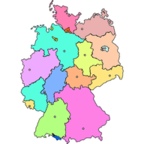
The largest cities in Germany
According to a definition by the International Statistical Conference dating back to 1887, all cities with a population of more than 100,000 are considered large cities. There are currently 82 large cities in Germany, but which of them are actually the largest?
The 15 largest cities in Germany
1. Berlin
With around 3.5 million inhabitants, BerlinDie deutsche Hauptstadt ist zugleich ein dynamischer Stadtstaat und kulturelles Zentrum Europas. Berlin ist die bevölkerungsreichste Stadt Deutschlands und Sitz der Bundesregierung. Die Metropole gilt als globaler Hotspot für Start-ups und Kreative. Historisch ist sie durch die ehemalige Teilung geprägt. Zudem bietet Berlin eine außergewöhnliche Vielfalt an Museen. is the largest city in Germany and also the country’s political capital. With around 160 museums, the Reichstag building, the BrandenburgBrandenburg umschließt die Hauptstadt Berlin und ist geprägt durch weite Seenlandschaften und Kiefernwälder. Potsdam ist die Landeshauptstadt, berühmt für das Schloss Sanssouci. Das Land ist eines der dünn besiedelsten Gebiete Deutschlands. Wirtschaftlich gewinnt es durch moderne Industrieansiedlungen an Bedeutung. Die Region bietet Erholung pur in unberührter Natur. Gate and the Berlin Cathedral as the architectural highlight of the city, Berlin has far more to offer than gray prefabricated buildings. Moreover, Berlin is not only the most populous municipality in Germany, but also the largest city in terms of area at 892 square kilometers.
2. Hamburg
The Hanseatic city of HamburgDie freie Hansestadt Hamburg ist ein wirtschaftlich bedeutender Stadtstaat mit dem größten Seehafen Deutschlands. Das "Tor zur Welt" ist zudem eine führende Medien- und Logistikmetropole. Die Speicherstadt gehört zum UNESCO-Weltkulturerbe. Kulturell glänzt Hamburg durch die Elbphilharmonie und zahlreiche Musicaltheater. Die Alster im Stadtzentrum bietet eine hohe Lebensqualität. is both a city and a state in the Federal Republic of Germany. With around 1.86 million inhabitants, Hamburg takes second place in the ranking and is also the eighth largest city in the EU. The Port of Hamburg is also one of the largest ports in Europe and even ranks 17th in the list of the world’s largest container ports.
3. Munich
Munich is the state capital of Bavaria and, with around 1.5 million inhabitants, the third largest city in Germany and the twelfth largest municipality in the European Union. More than 2.7 million people live in the independent city of Munich, which is classified as a cosmopolitan city. Economically, Munich is one of the fastest growing cities in Europe and also one of the most important financial centers for the Federal Republic of Germany.
4. Cologne
The most populous city in the state of North Rhine-Westphalia is also the fourth largest municipality in Germany. Cologne has more than one million inhabitants and has made a name for itself internationally as a cultural and economic metropolis. Cologne is also the stronghold of the carnival season and home to numerous media companies, music producers and associations.
5. Frankfurt am Main
The largest city in the state of Hesse has a population of around 730,000. Since the Middle Ages, Frankfurt am Main has been one of the most important urban centers in Germany and from an economic point of view, the municipality is one of the world’s major cities. Today, Frankfurt am Main is an extremely important industrial, trade fair and service center and, due to its central location, an important European transport hub.
6. Stuttgart
As the capital of Baden Württemberg and also the largest city in the federal state, Stuttgart has a population of over 640,000. The city district is divided into a total of 23 districts. Numerous state authorities have their headquarters in Stuttgart and the state government of Baden-WürttembergDas drittgrößte Bundesland im Südwesten besticht durch wirtschaftliche Stärke und Innovationskraft. Stuttgart ist die Landeshauptstadt und Zentrum der Automobilindustrie. Geografisch prägen der Schwarzwald und der Bodensee die Region. Baden-Württemberg gilt als Genießerland mit hoher Lebensqualität. Zudem ist es für seine zahlreichen "Hidden Champions" im Mittelstand weltweit bekannt. and the state parliament are also located there. Last but not least, this makes Stuttgart a very important financial center in Germany.
7. Düsseldorf
The independent city of Düsseldorf is the state capital of North Rhine-Westphalia with a population of around 610,000. Many stock market-oriented companies are based in Düsseldorf and, as a trade fair city, the Ruhr metropolis is also the location with the highest turnover for advertising and clothing fashion. Düsseldorf has also always been an important stock exchange and banking center.
8. Dortmund
In the Rhine-Ruhr metropolitan region in North Rhine-Westphalia, Dortmund is the eighth largest city in Germany with a population of over 600,000. In 2010, the independent city was the European Capital of Culture alongside other major cities in the Ruhr region. With its airport and main railway station, Dortmund is the most important transport hub in the east of the Ruhr region and today the city has also become an important location for technologies and services in Germany.
9. Essen
With a good 580,000 inhabitants, Essen is a very important industrial location as well as the headquarters of well-known large companies and a university location. Essen was also the European Capital of Culture in 2010. The city in North Rhine-Westphalia was also awarded the title of „European Green Capital“ in 2017.
10. Leipzig
Leipzig is the largest city in the Free State of Saxony and the fastest-growing city in Germany. In addition, the independent city of Leipzig is one of the six regional centers of the state of Saxony. Leipzig is a historic economic center, especially for Central Germany, as well as a center of administration, trade and transport, culture and education.
11. Bremen
BremenDer kleinste deutsche Stadtstaat besteht aus den zwei Städten Bremen und Bremerhaven. Bremen ist bekannt für die traditionsreiche Seefahrt und den bedeutenden Außenhandel. Die Stadtmusikanten sind das weltberühmte Wahrzeichen der Landeshauptstadt. Bremerhaven ist ein wichtiger Standort für die maritime Forschung. Zudem verfügt Bremen über eine traditionsreiche Luftfahrtindustrie. is a two-city state that also includes Bremerhaven, 53 km to the north. The capital of the state of Bremen, with its 557,000 inhabitants, is divided into five city districts. In terms of area, Bremen, which is 38 kilometers long and 16 kilometers wide, is the sixteenth largest city in Germany.
12. Dresden
Dresden is the twelfth largest municipality in Germany and the second largest city in Saxony after Leipzig (around 550,000 inhabitants). Numerous state authorities, the Saxon state government and the Saxon state parliament are based in the city, making it Saxony’s most important political center. The city is also home to important cultural and educational institutions, such as the Dresden University of Technology.
13. Hanover
A good 530,000 inhabitants live in the city of Hanover in Lower Saxony, which puts it in thirteenth place in the ranking. Hannover has gained international renown thanks to the Hannover Messe trade fair, which has been held in the city since 1947, and the CeBIT trade fair. With a total of nine universities and its connection to the inland waterway network, Hanover is also an important center.
14. Nuremberg
Nuremberg is located in the administrative district of Middle Franconia and is the second largest city in Bavaria with just under 510,000 inhabitants. The service industry is of great economic importance for the independent city. Nuremberg is internationally renowned for its Christmas market, the Old Town with its historic mile and the numerous monuments and museums. Further tips for popular city destinations in Bavaria, nature and culture Discover attractions in southern Germany
15. Duisburg
The last place in the ranking of the top 15 largest cities in Germany is occupied by Duisburg with a good 490,000 inhabitants. As part of the Ruhr conurbation, Duisburg was also the European Capital of Culture in 2010. The port of Duisburg is considered the largest inland port in the world and the iron and steel industry also characterizes the city in the Ruhr region. Almost a third of all pig iron produced in Germany comes from Duisburg.
The 50 largest cities in Germany
Rang |
StadtStädte in Deutschland sind rechtlich eigenständige Gemeinden mit Stadtrecht, die als wirtschaftliche und kulturelle Zentren fungieren. Sie reichen von historischen Kleinstädten bis zu Millionenmetropolen wie Berlin. Charakteristisch sind eine dichte Bebauung, zentrale Marktplätze und eine ausgeprägte Infrastruktur. Als "kreisfreie Städte" übernehmen sie zudem oft Aufgaben der Kreisverwaltung selbstständig. |
Einwohnerzahl 2015 |
Fläche [km²] (2015) |
Großstadt erstmals |
Bundesland |
1 |
Berlin |
3.520.031 |
891,68 |
1747 |
Berlin |
2 |
Hamburg |
1.787.408 |
755,30 |
1787 |
Hamburg |
3 |
MünchenMünchen ist die Landeshauptstadt von Bayern und die drittgrößte Stadt Deutschlands. Die Metropole an der Isar ist ein weltweit führender Wirtschaftsstandort, besonders für Technologie und Automobilbau. Kulturell ist München weltberühmt für das Oktoberfest, historische Architektur wie die Frauenkirche, eine hohe Lebensqualität sowie die direkte Nähe zu den Alpen. |
1.450.381 |
310,70 |
1852 |
BayernBayern ist das flächengrößte deutsche Bundesland mit der Landeshauptstadt München. Der Freistaat überzeugt durch eine enorme Wirtschaftskraft in Technik und Automobilbau. Geografisch prägen die Alpen und die Donau das Bild. Kulturell ist Bayern für Traditionen wie das Oktoberfest weltbekannt. Mit der Zugspitze liegt der höchste Berg Deutschlands in den bayerischen Alpen. |
4 |
Köln |
1.060.582 |
405,02 |
1852 |
Nordrhein-WestfalenNRW ist das bevölkerungsreichste Bundesland mit der Landeshauptstadt Düsseldorf. Das Ruhrgebiet bildet den größten Ballungsraum Deutschlands und war historisch das Zentrum der Montanindustrie. Heute ist das Land ein moderner Dienstleistungs- und Medienstandort. Köln ist die größte Stadt des Landes. Zudem besitzt NRW eine extrem dichte Kultur- und Hochschullandschaft. |
5 |
Frankfurt am Main |
732.688 |
248,31 |
1875 |
HessenHessen ist das finanzielle Zentrum Deutschlands mit der Metropole Frankfurt am Main. Die offizielle Landeshauptstadt ist jedoch das elegante Wiesbaden. Der Frankfurter Flughafen ist einer der wichtigsten Verkehrsknotenpunkte Europas. Hessen ist zudem das waldreichste Bundesland Deutschlands. Die Region ist berühmt für ihren traditionellen Apfelwein und die starke chemische Industrie. Mehr |
6 |
Stuttgart |
623.738 |
207,35 |
1874 |
Baden-Württemberg |
7 |
Düsseldorf |
612.178 |
217,41 |
1882 |
Nordrhein-Westfalen |
8 |
Dortmund |
586.181 |
280,71 |
1894 |
Nordrhein-Westfalen |
9 |
Essen |
582.624 |
210,34 |
1896 |
Nordrhein-Westfalen |
10 |
Leipzig |
560.472 |
297,39 |
1871 |
SachsenSachsen ist ein bedeutender Industriestandort im Osten mit der Landeshauptstadt Dresden. Die Region ist berühmt für ihre reiche Kunst- und Kulturgeschichte sowie das Erzgebirge. Leipzig ist ein dynamisches Zentrum für Logistik und Handel. Das "Silicon Saxony" ist führend in der europäischen Mikroelektronik. Zudem wird hier die Tradition der Porzellanherstellung gepflegt. |
11 |
Bremen |
557.464 |
325,56 |
1875 |
Bremen |
12 |
Dresden |
543.825 |
328,31 |
1852 |
Sachsen |
13 |
Hannover |
532.163 |
204,15 |
1875 |
NiedersachsenNiedersachsen ist flächenmäßig das zweitgrößte Bundesland und erstreckt sich von der Nordsee bis zum Harz. Hannover ist die Landeshauptstadt und ein weltweit bedeutender Messestandort. Das Land ist das Zentrum der deutschen Automobilproduktion rund um Wolfsburg. Die Landwirtschaft spielt hier eine tragende Rolle. Zudem ist die Windkraft ein zentraler Energiefaktor. |
14 |
Nürnberg |
509.975 |
186,38 |
1881 |
Bayern |
15 |
Duisburg |
491.231 |
232,80 |
1903 |
Nordrhein-Westfalen |
16 |
Bochum |
364.742 |
145,66 |
1904 |
Nordrhein-Westfalen |
17 |
Wuppertal |
350.046 |
168,39 |
1884 |
Nordrhein-Westfalen |
18 |
Bielefeld |
333.090 |
258,82 |
1930 |
Nordrhein-Westfalen |
19 |
Bonn |
318.809 |
141,06 |
1934 |
Nordrhein-Westfalen |
20 |
Münster |
310.039 |
303,28 |
1915 |
Nordrhein-Westfalen |
21 |
Karlsruhe |
307.755 |
173,46 |
1901 |
Baden-Württemberg |
22 |
Mannheim |
305.780 |
144,96 |
1897 |
Baden-Württemberg |
23 |
Augsburg |
286.374 |
146,84 |
1909 |
Bayern |
24 |
Wiesbaden |
276.218 |
203,92 |
1905 |
Hessen |
25 |
Gelsenkirchen |
260.368 |
104,94 |
1903 |
Nordrhein-Westfalen |
26 |
Mönchengladbach |
259.996 |
170,47 |
1921 |
Nordrhein-Westfalen |
27 |
Braunschweig |
251.364 |
192,17 |
1890 |
Niedersachsen |
28 |
Chemnitz |
248.645 |
220,86 |
1883 |
Sachsen |
29 |
Kiel |
246.306 |
118,65 |
1900 |
Schleswig-HolsteinDas Land zwischen Nord- und Ostsee ist geprägt durch Küsten, Windkraft und Landwirtschaft. Kiel ist die Landeshauptstadt und bekannt für das weltgrößte Segelevent, die Kieler Woche. Der Tourismus auf den nordfriesischen Inseln wie Sylt ist ein Hauptpfeiler. Es ist das einzige Bundesland mit einer anerkannten dänischen Minderheit. Zudem spielt der Schiffbau eine traditionelle Rolle. |
30 |
Aachen |
245.885 |
160,85 |
1888 |
Nordrhein-Westfalen |
31 |
Halle (Saale) |
236.991 |
135,02 |
1890 |
Sachsen-AnhaltSachsen-Anhalt ist das Land der Frühgeschichte und des Weltkulturerbes mit der Hauptstadt Magdeburg. Es beherbergt die meisten UNESCO-Stätten in Deutschland, darunter das Bauhaus Dessau. Der Harz mit dem Brocken ist ein bedeutendes Natur- und Wandergebiet. Wirtschaftlich ist die Region stark in der Chemieindustrie verwurzelt. Zudem wurde hier die Reformation durch Luther geprägt. |
32 |
Magdeburg |
235.723 |
201,00 |
1882 |
Sachsen-Anhalt |
33 |
Freiburg im Breisgau |
226.393 |
153,06 |
1934 |
Baden-Württemberg |
34 |
Krefeld |
225.144 |
137,78 |
1888 |
Nordrhein-Westfalen |
35 |
Lübeck |
216.253 |
214,21 |
1912 |
Schleswig-Holstein |
36 |
Oberhausen |
210.934 |
77,10 |
1914 |
Nordrhein-Westfalen |
37 |
Erfurt |
210.118 |
269,88 |
1906 |
ThüringenThüringen liegt im geografischen Zentrum Deutschlands mit der Landeshauptstadt Erfurt. Es ist bekannt als das grüne Herz Deutschlands durch den Thüringer Wald. Das Land blickt auf eine große Tradition als Heimat von Dichtern wie Goethe und Schiller zurück. Jena ist ein führender Standort für Optik und Photonik. Zudem ist Thüringen berühmt für seine Bratwurst. |
38 |
Mainz |
209.779 |
97,74 |
1908 |
Rheinland-PfalzDas Land im Westen ist Deutschlands Weinregion Nummer eins mit der Landeshauptstadt Mainz. Es grenzt an drei europäische Nachbarstaaten und ist stark exportorientiert. Die Landschaft ist geprägt durch das Rheintal und die Eifel. Rheinland-Pfalz besitzt eine reiche römische Geschichte. Zudem ist es ein führender Standort für Chemie- und Pharmaunternehmen. |
39 |
Rostock |
206.011 |
181,26 |
1935 |
Mecklenburg-VorpommernDas nordöstliche Bundesland ist geprägt durch die Ostseeküste und die Mecklenburgische Seenplatte. Schwerin ist die Landeshauptstadt, bekannt für sein märchenhaftes Schloss. Der Tourismus ist hier der wichtigste Wirtschaftszweig. Das Land beherbergt zwei der ältesten Universitäten Nordeuropas in Rostock und Greifswald. Es ist zudem die am dünnsten besiedelte Region Deutschlands. |
40 |
Kassel |
197.984 |
106,78 |
1899 |
Hessen |
41 |
Hagen |
189.044 |
160,45 |
1928 |
Nordrhein-Westfalen |
42 |
Hamm |
179.397 |
226,43 |
1975 |
Nordrhein-Westfalen |
43 |
Saarbrücken |
178.151 |
167,09 |
1909 |
SaarlandDas Saarland ist das kleinste Flächenbundesland und liegt an der Grenze zu Frankreich. Saarbrücken ist die Landeshauptstadt und das kulturelle Zentrum. Die Region war lange durch Kohle und Stahl geprägt, wandelt sich aber zum Technologiestandort. Die französische Lebensart beeinflusst spürbar die lokale Gastronomie. Die Saarschleife ist das bekannteste Wahrzeichen. |
44 |
Mülheim an der Ruhr |
170.278 |
91,28 |
1908 |
Nordrhein-Westfalen |
45 |
Potsdam |
167.745 |
188,25 |
1939 |
Brandenburg |
46 |
Ludwigshafen am RheinDer Rhein ist einer der bedeutendsten Flüsse Europas und ca: 1233 km lang. Er entspringt in den Schweizer Alpen, durchfließt den Bodensee und mündet bei Rotterdam in die Nordsee. Als wichtigste Wasserstraße des Kontinents verbindet er große Industriezentren. Er prägt Landschaften wie das UNESCO-Welterbe Oberes Mittelrheintal und ist ökologisch sowie wirtschaftlich von zentraler Bedeutung. |
164.718 |
77,55 |
1921 |
Rheinland-Pfalz |
47 |
Oldenburg (Oldb) |
163.830 |
102,99 |
1946 |
Niedersachsen |
48 |
Leverkusen |
163.487 |
78,87 |
1963 |
Nordrhein-Westfalen |
49 |
Osnabrück |
162.403 |
119,79 |
1939 |
Niedersachsen |
50 |
Solingen |
158.726 |
89,54 |
1929 |
Nordrhein-Westfalen |
Rang |
Stadt |
Einwohnerzahl 2015 |
Fläche [km²] (2015) |
Großstadt erstmals |
Bundesland |
Page in German: die größten Städte in Deutschland
Sie dürfen diesen Beitrag gern teilen/ verlinken.

Klicken Sie einfach auf das Formularfeld und kopieren Sie sich den Link heraus.
Klicken Sie einfach auf das Formularfeld und kopieren Sie sich den Link heraus.
Klicken Sie einfach auf das Formularfeld und kopieren Sie sich den Link heraus.